
لغة المقال / Article language
شعار Perinvo

PERINVO INSIGHTS / FUTURE OF WORK & AI

هل انتهت فرص العمل... أم أن الشركات ما زالت تبحث عن وظائف من الماضي؟

الذكاء الاصطناعي، تباطؤ التوظيف، وعشر وظائف يمكن أن تساعد الشركات على إعادة تصميم العمل بدلا من الاكتفاء بإعادة إنتاج المسميات التقليدية.

مستقبل الوظائفالتحول الرقميالموارد البشريةتطوير المهارات

بقلم: Hend Kamal · Perinvo Insights · أكتوبر 2026

الفكرة الرئيسية

القضية ليست اختفاء جميع الوظائف، بل تغير المهام التي تخلق قيمة حقيقية. هناك أعمال قابلة للأتمتة، لكن هناك أيضا حاجة متزايدة إلى التحليل والحكم البشري وإدارة الأنظمة الذكية.

السؤال الأهم

هل نعيد تدريب موظف يؤدي عملا متكررا، أم نستغني عنه ثم نبحث عن شخص جديد يمتلك مهارات كان يمكن تطويرها داخليا؟

01 أزمة فرص عمل... أم أزمة في تصميم الوظائف؟

في أسواق كثيرة، يواجه الباحثون عن العمل منافسة صعبة، بينما تواصل الشركات الإعلان عن وظائف تركّز على إدخال البيانات وإعداد التقارير ومتابعة المعاملات اليدوية. وفي الوقت نفسه، تتطور أدوات الذكاء الاصطناعي القادرة على المساعدة في تنفيذ جزء كبير من هذه المهام.

لكن انخفاض فرص التوظيف لا يمكن تفسيره بالذكاء الاصطناعي وحده؛ فالدورة الاقتصادية وتكاليف التمويل والاستثمار والظروف القطاعية تؤثر أيضا في قرارات التعيين. والأدق أن نسأل: هل تغيرت احتياجات المؤسسات أسرع من تغير أوصافها الوظيفية ومسارات التأهيل؟

02 ماذا تقول البيانات؟

تشير الأدلة الدولية إلى سوق عمل في حالة تحول، وليس إلى سيناريو واحد مؤكّد لاختفاء الوظائف:
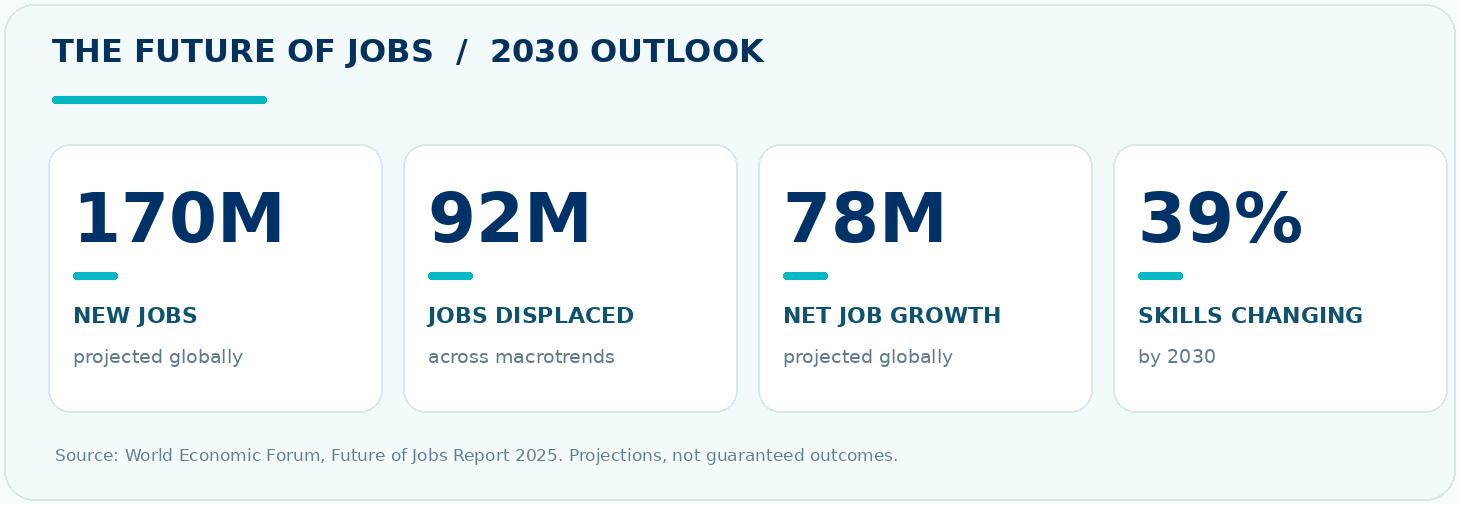
توقعات المنتدى الاقتصادي العالمي حتى 2030: 170 مليون وظيفة جديدة، إزاحة 92 مليون، صافي نمو 78 مليون، وتغير 39 بالمئة من المهارات
ملخص بصري لأرقام تقرير Future of Jobs 2025. هذه توقعات عالمية لعوامل متعددة وليست تقديرا للأثر المنفرد للذكاء الاصطناعي.

قدر المنتدى الاقتصادي العالمي أن التحولات الاقتصادية والتكنولوجية والديموغرافية وغيرها قد ترتبط بخلق 170 مليون وظيفة وإزاحة 92 مليون بحلول 2030، بصافي زيادة متوقعة قدرها 78 مليونا. كما توقع تغير نحو 39% من المهارات الحالية المطلوبة.

وقدرت منظمة العمل الدولية عام 2025 أن وظيفة واحدة من كل أربع وظائف عالميا معرضة بدرجات متفاوتة للذكاء الاصطناعي التوليدي، مع رجحان تحول المهام على الاستبدال الكامل.

وفي 27 أكتوبر 2026، رصدت LinkedIn استمرار بطء التوظيف في عدة أسواق، رغم ظهور فرص جديدة مرتبطة بالذكاء الاصطناعي والمهارات وريادة الأعمال. وهذه النتائج لا تعني أن الفرص الجديدة موزعة بالتساوي بين الدول أو فئات العاملين.

وفي منطقتنا، حذر تقرير العمل الدولية والإسكوا (2026) من أن أثر الذكاء الاصطناعي في الوظائف العربية حتى 2035 سيتوقف بدرجة مهمة على الاستثمار في المهارات والسياسات والقدرة على إدارة الانتقال.

03 10 وظائف أقترح أن تعيد الشركات التفكير فيها

الفكرة هنا ليست إلغاء أصحاب الخبرة أو استبدال الموظفين بآلات؛ بل نقل جزء من الجهد من المهام المتكررة إلى التحليل والتحسين والمساءلة. وفيما يلي عشرة مسارات يمكن توسيعها في السوق المصري والخليجي وفق حجم الشركة ونضجها الرقمي:

01

متخصص ذكاء القوى العاملة

People & Workforce Intelligence Specialist

من: إعداد جداول وتقارير عدد الموظفين

إلى: تحليل الإنتاجية وتكلفة العمالة والتنبؤ باحتياجات التوظيف وربطها بالطلب التشغيلي

مثال عملي: قبل تعيين 20 عاملا جديدا، يراجع الطاقة الإنتاجية والورديات ومعدلات الغياب لتحديد العجز الحقيقي.

02

متخصص أتمتة الرواتب والامتثال

Payroll Automation & Compliance Specialist

من: الإدخال اليدوي لمتغيرات المرتبات

إلى: بناء ضوابط آلية، ومراجعة الاستثناءات، وضمان صحة الضرائب والتأمينات وربط الأنظمة

مثال عملي: شركة لديها 2,000 موظف تحتاج إلى كشف الأخطاء قبل الصرف، وليس فقط إنجاز كشف الراتب.

03

مصمم سير العمل والأتمتة الذكية

AI Workflow & Automation Designer

من: متابعة الطلبات عبر بريد ورسائل متعددة

إلى: رسم العمليات وربط الأنظمة وتصميم الموافقات الآلية مع إشراف بشري على القرارات الحساسة

مثال عملي: تحويل دورة طلب المشتريات من رسائل متناثرة إلى مسار واضح من الطلب حتى الاعتماد.

04

مدير تشغيل وكلاء الذكاء الاصطناعي

AI Agent Operations Manager

من: تشغيل أدوات منفصلة دون قياس

إلى: مراقبة أداء الوكلاء الرقميين، والتحقق من الجودة، وضبط الصلاحيات والتصعيد للبشر

مثال عملي: مراجعة إجابات وكيل خدمة العملاء وتحويل الشكاوى المعقدة لموظف مسؤول.

05

محلل ذكاء القرارات

Decision Intelligence Analyst

من: إصدار تقرير شهري يصف الأرقام

إلى: تحويل البيانات إلى سيناريوهات وخيارات وتوصيات مرتبطة بالتكلفة والمخاطر

مثال عملي: بدلا من عرض انخفاض المبيعات 10%، يقدم تفسيرا محتملا وثلاثة خيارات عملية لاختبارها.

06

مصمم منظومة المواهب القائمة على المهارات

Skills-Based Talent Architect

من: فرز السير الذاتية حسب المسمى وسنوات الخبرة فقط

إلى: بناء خرائط مهارات، وتقييم عملي للمرشحين، ومسارات انتقال وظيفي مع مراقبة التحيز

مثال عملي: تقييم مرشح لتحليل الأعمال من خلال دراسة حالة حتى لو لم يحمل المسمى الوظيفي سابقا.

07

محلل العمليات والطاقة التشغيلية الذكية

Smart Operations & Capacity Analyst

من: اكتفاء بتقارير إنتاج وتشغيل منفصلة

إلى: ربط إنتاجية المعدات والورديات والأفراد بالأعطال والتكلفة وخطط التوسع

مثال عملي: قبل شراء ماكينة جديدة، يراجع معدلات التشغيل والتوقف والقدرة المتاحة غير المستغلة.

08

مصمم أتمتة تجربة العملاء

Customer Experience Automation Designer

من: الرد اليدوي على الأسئلة المتكررة

إلى: تصميم رحلات رقمية ومساعدين ذكيين وتحليل الشكاوى وتحديد متى يلزم تدخل بشري

مثال عملي: تقديم حالة الطلب تلقائيا مع تحويل الحالات الحساسة لشخص مؤهل.

09

مصمم إعادة التأهيل وتطوير مهارات القوى العاملة

Workforce Reskilling & Learning Designer

من: تنظيم دورات تدريبية بعدد ساعات فقط

إلى: تصميم تعلم قائم على مشروعات حقيقية وقياس تغير المهارة والأداء

مثال عملي: تطوير موظف إدخال بيانات ليعمل في جودة البيانات ومراجعة نتائج الأتمتة.

10

متخصص حوكمة ومخاطر الذكاء الاصطناعي

AI Governance & Risk Specialist

من: اعتماد أدوات جديدة دون سياسة واضحة

إلى: وضع ضوابط الاستخدام وحماية البيانات والمساءلة والاختبارات والمراجعة البشرية

مثال عملي: مراجعة أداة فرز المتقدمين للتوظيف للتحقق من معايير الاختيار وإمكانية الاعتراض.

04 ماذا يحدث لو أعدنا تصميم قسم الموارد البشرية؟

تخيل شركة صناعية لديها 1,500 موظف، يعمل فريق الموارد البشرية فيها على حساب الرواتب، ومتابعة الحضور، والرد على استفسارات الموظفين، وإعداد تقارير الإدارة. لا يلزم أن تبدأ خطة التطوير بزيادة الأفراد أو خفضهم؛ يمكن أن تبدأ بإعادة توزيع طبيعة العمل.

الرواتب
الوضع الشائع

تجميع المتغيرات يدويا وملاحقة الأخطاء بعد الصرف

بعد إعادة التصميم

تكامل الحضور والرواتب مع كشف استثناءات آلي، ومراجعة بشرية للنتائج

التوظيف
الوضع الشائع

التصفية الأولى اعتمادا على المسميات والخبرة فقط

بعد إعادة التصميم

اختبارات مهارات وعينات عمل ومعايير اختيار واضحة قابلة للمراجعة

التقارير
الوضع الشائع

إرسال جداول طويلة بنهاية الشهر

بعد إعادة التصميم

لوحة مؤشرات توضح المشكلات وخيارات القرار وملاك الإجراءات

05 ماذا عن حديثي التخرج؟

هناك تحد حقيقي غالبا ما يغيب عن النقاش: إذا اختفت بعض المهام البسيطة التي كانت مدخلا إلى سوق العمل، فمن أين يحصل حديث التخرج على الخبرة العملية؟ لا يصح أن تطلب المؤسسة خبرة متقدمة من الجميع، ثم تتوقف عن توفير فرص بناء هذه الخبرة.

للشركات

برامج تدريب فعلي، ومشروعات قصيرة، وفرص تنقل داخلي وإعادة تأهيل بدلا من اعتبار الخبرة شرطا بلا بداية.

للموظفين

إتقان أدوات المجال، وفهم العمليات، والتحليل، والتواصل، والقدرة على مراجعة مخرجات الذكاء الاصطناعي.

للخريجين

بناء ملف مشروعات واقعية، وتقييمات عملية للمهارات، والتعلم من مشكلات السوق بدلا من جمع شهادات فقط.

06 قبل إنشاء وظيفة جديدة... اسأل خمسة أسئلة

  1. ما النتيجة التجارية التي ننتظرها من هذه الوظيفة، وكيف سنقيسها؟
  2. أي مهام يمكن أتمتتها بأمان، وأي قرارات تحتاج حكما بشريا؟
  3. هل يمكن إعادة تأهيل موظف حالي بدلا من بدء البحث عن تعيين جديد؟
  4. ما المهارات التي سنحتاج إليها خلال ثلاث سنوات، وليس اليوم فقط؟
  5. كيف سنضمن خصوصية البيانات والعدالة ووضوح المسؤولية عند استخدام AI؟

يمكن البدء بتجربة محدودة داخل إدارة واحدة: توثيق العملية الحالية، وقياس وقتها وتكلفتها وأخطائها، ثم إعادة التصميم، وإعادة توزيع المسؤوليات، وقياس النتائج قبل تعميم التغيير.

07 الخلاصة: نحتاج إلى وظائف أفضل، لا مجرد مسميات أحدث

التكنولوجيا لن تلغي الحاجة إلى الإنسان، لكنها قد تقلل الحاجة إلى بعض المهام وتغير طريقة إنجاز كثير من الأعمال. وفي المقابل ستظهر احتياجات جديدة تتعلق بالتحليل والتكامل والحماية والتعليم والحوكمة.

لذلك فإن مستقبل سوق العمل لا يتوقف على تطوير أدوات الذكاء الاصطناعي وحدها، بل على قدرة الشركات على إعادة تصميم الوظائف، واستثمار خبرة العاملين، وخلق بدايات مهنية عادلة للأجيال الجديدة.

PERINVO PERSPECTIVE

المستقبل لا يجب أن يكون سوقا به وظائف أقل... بل يمكن أن يكون سوقا به وظائف أفضل وأكثر إنتاجية وقيمة.

لو كنت مسؤولا عن الهيكل التنظيمي لشركتك اليوم: ما أول وظيفة ستعيد تصميمها؟ وما الوظيفة الجديدة التي ستضيفها؟

اقرأ المزيد من Perinvo Insights

08 المصادر والمراجع

© Perinvo 2026 · مقال تحليلي يضم مقترحات تصميم وظيفي لا تمثل توقعات مؤكدة للتوظيف أو توصيات قانونية.

Perinvo logo

PERINVO INSIGHTS / FUTURE OF WORK & AI

Are Job Opportunities Disappearing… or Are Companies Still Hiring for the Past?

Artificial intelligence, slower hiring, and ten proposed roles that can help companies redesign work instead of repeating traditional job descriptions.

Future of WorkDigital TransformationHuman ResourcesSkills Development

By Hend Kamal · Perinvo Insights · October 2026

The Core Idea

The issue is not the disappearance of all jobs, but a shift in the tasks that create real value. Some tasks can be automated, while demand also grows for analysis, human judgment and oversight of intelligent systems.

The Essential Question

Should we retrain an employee doing repetitive work, or replace them and search for skills that could have been developed internally?

01 A Shortage of Jobs,or a Problem with Job Design?

Job seekers face strong competition in many markets, while companies continue to advertise roles focused on data entry, reporting and manual follow-up. Meanwhile, AI tools are increasingly able to help carry out many of these tasks.

Yet slower hiring cannot be explained by AI alone: economic cycles, financing costs, investment and sector conditions also shape recruitment decisions. A more useful question is: Have organizational needs changed faster than job descriptions and development pathways?

02 What Does the Evidence Tell Us?

International evidence points to a labor market in transition, not one inevitable scenario of disappearing jobs:

WEF 2030 global projections: 170 million new jobs, 92 million displaced jobs, 78 million net job gains, 39 percent of skills changing
Visual summary of the Future of Jobs Report 2025. These global projections reflect several major forces, not the isolated impact of AI.

The World Economic Forum projects that economic, technological, demographic and other shifts could create 170 million roles and displace 92 million by 2030, producing a projected net gain of 78 million. It also expects around 39% of existing skills to change.

The International Labour Organization estimated in 2025 that one in four jobs worldwide has some degree of exposure to generative AI, with task transformation more likely than complete replacement.

On 27 October 2026, LinkedIn reported continued slow hiring in several markets alongside new opportunities linked to AI, skills and entrepreneurship. That does not mean these opportunities are distributed equally across countries or workers.

For the Arab region, the 2026 report by the ILO and ESCWA indicates that AI’s effects on employment through 2035 will depend significantly on skills investment, policies and the ability to manage the transition.

03 Ten Roles Companies Should Consider Redesigning

The aim is not to eliminate experienced professionals or replace people with machines. It is to move effort from routine tasks toward analysis, improvement and accountability. These ten paths may be useful in Egypt and the Gulf, depending on company size and digital maturity:

01

People & Workforce Intelligence Specialist

People & Workforce Intelligence Specialist

From: Preparing headcount spreadsheets and reports

To: Analyzing productivity and workforce costs, forecasting staffing needs and connecting them to operational demand

Example: Before hiring 20 additional workers, review capacity, shifts and absenteeism to identify the real staffing gap.

02

Payroll Automation & Compliance Specialist

Payroll Automation & Compliance Specialist

From: Manually entering payroll variables

To: Building automated checks, reviewing exceptions, validating taxes and social insurance, and integrating systems

Example: A company with 2,000 employees needs to detect errors before payment, not merely complete the payroll register.

03

AI Workflow & Automation Designer

AI Workflow & Automation Designer

From: Tracking requests through disconnected emails and messages

To: Mapping processes, connecting systems and designing automated approvals with human oversight for sensitive decisions

Example: Turn scattered purchase-request emails into a clear workflow from submission to approval.

04

AI Agent Operations Manager

AI Agent Operations Manager

From: Using disconnected tools without performance measurement

To: Monitoring AI agents, validating output quality, managing permissions and escalating cases to humans

Example: Review an AI customer-service agent’s responses and route complex complaints to an accountable employee.

05

Decision Intelligence Analyst

Decision Intelligence Analyst

From: Producing monthly reports that describe numbers

To: Turning data into scenarios, options and recommendations linked to cost and risk

Example: Instead of only reporting a 10% sales decline, explain possible causes and present three practical options to test.

06

Skills-Based Talent Architect

Skills-Based Talent Architect

From: Screening CVs by job title and years of experience alone

To: Developing skills maps, practical assessments and mobility pathways while monitoring bias

Example: Assess a business-analysis candidate through a case exercise, even if they have never held that job title.

07

Smart Operations & Capacity Analyst

Smart Operations & Capacity Analyst

From: Relying on separate production and operations reports

To: Connecting equipment, shifts and people capacity to downtime, costs and expansion plans

Example: Before buying another machine, assess utilization, downtime and unused existing capacity.

08

Customer Experience Automation Designer

Customer Experience Automation Designer

From: Answering recurring customer questions manually

To: Designing digital customer journeys and AI assistants, analyzing complaints and identifying when human help is needed

Example: Provide order status automatically while routing sensitive cases to a qualified person.

09

Workforce Reskilling & Learning Designer

Workforce Reskilling & Learning Designer

From: Measuring training mainly by hours delivered

To: Designing project-based learning and measuring improvements in skills and performance

Example: Help a data-entry employee transition into data quality and reviewing automation outputs.

10

AI Governance & Risk Specialist

AI Governance & Risk Specialist

From: Adopting new tools without a clear policy

To: Setting controls for usage, privacy, accountability, testing and human review

Example: Review an AI applicant-screening tool for fair selection criteria and a way to challenge decisions.

04 What If We Redesigned the HR Department?

Imagine a manufacturing company with 1,500 employees. Its HR team processes payroll, tracks attendance, answers employee questions and prepares management reports. Transformation need not start by adding or cutting headcount; it can begin by redistributing the work itself.

Payroll
Common approach

Collecting payroll variables manually and correcting errors after payments

Redesigned approach

Integrated attendance and payroll, automated exception checks, and human review

Recruitment
Common approach

Initial screening based mainly on job titles and experience

Redesigned approach

Skills assessments, work samples and reviewable selection criteria

Reporting
Common approach

Sending long spreadsheets at month-end

Redesigned approach

A dashboard highlighting issues, decision options and accountable owners

05 What About Recent Graduates?

There is a real challenge that is often missing from the discussion: if basic tasks that once provided entry-level experience are automated, where will graduates gain practical experience? Employers cannot require advanced experience from everyone while withdrawing opportunities to build it.

For Companies

Offer hands-on internships, short projects, internal mobility and reskilling rather than treating experience as a requirement without a starting point.

For Employees

Learn the tools of your field, understand processes, build analytical and communication skills, and learn to check AI outputs.

For Graduates

Build a portfolio of real projects, demonstrate skills through practical assessments, and solve genuine market problems rather than collecting certificates alone.

06 Before Creating a New Position, Ask Five Questions

  1. What business outcome should this role deliver, and how will we measure it?
  2. Which tasks can be automated safely, and which decisions require human judgment?
  3. Can we retrain an existing employee instead of immediately hiring someone new?
  4. Which skills will we need in three years, not just today?
  5. How will we protect privacy, fairness and clear accountability when using AI?

Start with a limited pilot in one department: document the current process, measure time, cost and errors, redesign the workflow, reassign responsibilities and compare results before scaling.

07 Conclusion: Better Jobs, Not Just Newer Titles

Technology will not remove the need for people, but it may reduce the need for some tasks and change how much of today’s work is completed. At the same time, new needs will emerge around analysis, integration, protection, learning and governance.

The future of employment therefore depends not only on better AI tools, but on how companies redesign work, build on employees’ experience and provide fair career entry points for new generations.

PERINVO PERSPECTIVE

The future does not have to mean a job market with fewer roles. It can mean better jobs, greater productivity and more meaningful value.

If you were redesigning your organization today, which role would you change first,and what new role would you create?

Explore More Perinvo Insights

08 Sources & References

© Perinvo 2026 · This analysis includes proposed organizational roles, not guaranteed hiring forecasts or legal advice.